CJC-1295 (Mod GRF 1-29): The GHRH Analog in Growth-Hormone Research
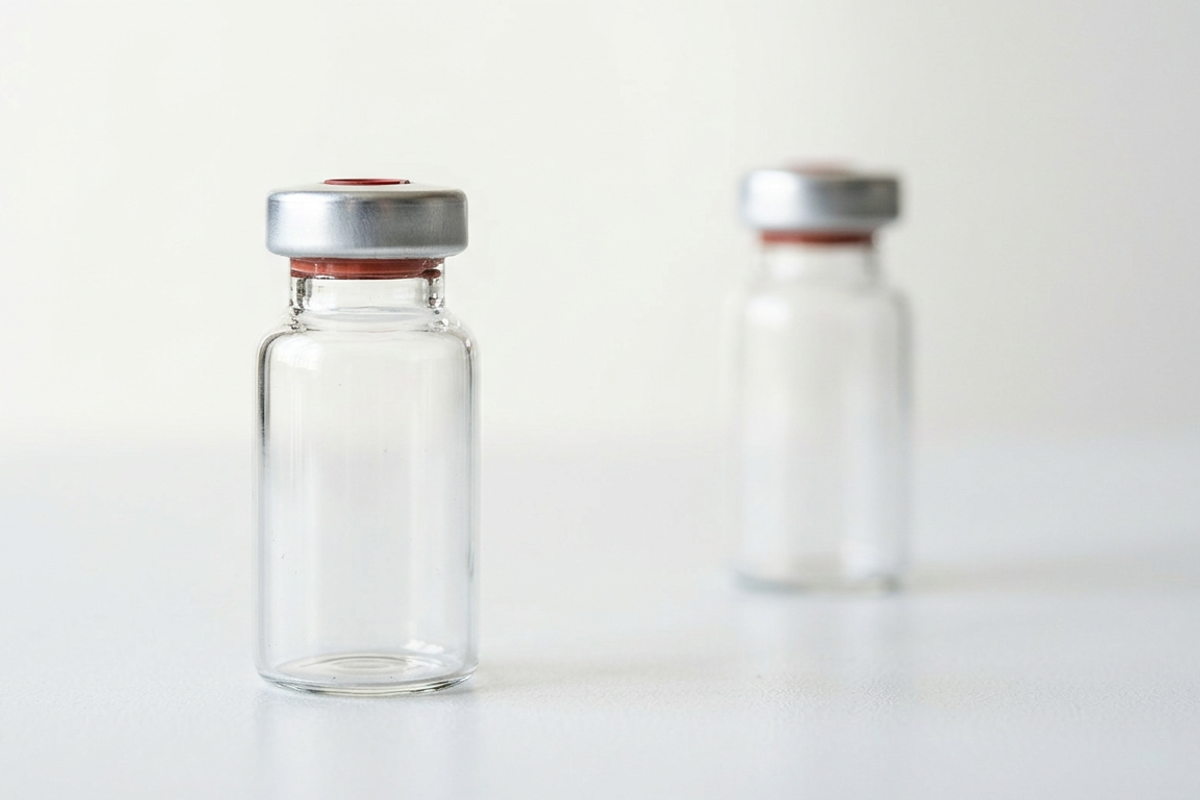
CJC-1295 is a synthetic analog of growth-hormone-releasing hormone (GHRH), studied for stimulating the pituitary's own release of growth hormone. Golden State Bio supplies the no-DAC form, also known as Modified GRF (1-29).
Everything below is provided for research context only. This is a laboratory research compound — not a medicine, and nothing here is medical or dosing advice.
What Is CJC-1295?
CJC-1295 is a tetrasubstituted analog of GHRH(1-29): four substitutions (D-Ala², Gln⁸, Ala¹⁵, Leu²⁷) that resist enzymatic and oxidative degradation relative to native GRF(1-29). Molecular weight ~3,368 g/mol.
DAC vs. No-DAC — an Important Distinction
- With DAC (Drug Affinity Complex): binds albumin for a very long half-life (days), giving sustained GH elevation.
- Without DAC (Modified GRF 1-29 — the form sold here): short half-life (~30 minutes), producing a pulsatile GH release that more closely mimics the body's natural secretion pattern.
How It Works in Research
- GHRH receptor: binds pituitary GHRH receptors, activating adenylate cyclase and raising cAMP to trigger GH secretion.
- Pulsatility: the short no-DAC action supports pulse-like GH release in research models.
Where It Sits in Research
CJC-1295 (a GHRH analog) is frequently studied together with a ghrelin-receptor agonist like Ipamorelin, because the two act on different receptors — see CJC-1295 vs. Ipamorelin. It sits in the same GH-axis family as Tesamorelin.
Handling in the Lab
- Ships as a lyophilized powder; reconstitute with bacteriostatic water using aseptic technique.
- Store the sealed powder cold and dark (long-term at -4°F); once reconstituted keep refrigerated at 36–46°F and use within a short window.
- Minimize freeze-thaw cycles and vial punctures.
- Judge quality by the lot-matched Certificate of Analysis (HPLC purity, mass-spec identity), not the label.
Frequently Asked Questions
What is CJC-1295?
CJC-1295 is a synthetic GHRH analog studied for stimulating growth-hormone release. Golden State Bio supplies the no-DAC form (Modified GRF 1-29). It is for laboratory research use only.
What's the difference between CJC-1295 with and without DAC?
With DAC, it binds albumin for a multi-day half-life and sustained GH elevation. Without DAC (Mod GRF 1-29), the half-life is ~30 minutes, giving pulsatile GH release closer to the natural pattern. GSB carries the no-DAC form.
How does CJC-1295 work?
It binds pituitary GHRH receptors, raising cAMP to trigger growth-hormone secretion. These are research findings, not medical claims.
Why are CJC-1295 and ipamorelin studied together?
They act on different receptors — CJC-1295 on the GHRH receptor, ipamorelin on the ghrelin/GHS receptor — so they are studied as complementary pathways in GH research.
Is CJC-1295 approved for human use?
No. It is a research compound for laboratory use only — not for human or veterinary use, and nothing here is medical advice.
References
Peer-reviewed research and recognized sources supporting the statements above, provided for research context only — not medical advice.
- Teichman SL, et al. Prolonged stimulation of GH and IGF-I secretion by CJC-1295, a long-acting GHRH analog. J Clin Endocrinol Metab. View source →
- CJC-1295 / Modified GRF(1-29) — GHRH analog chemistry. PubMed. View source →
Research-grade CJC-1295 (no DAC) — third-party tested, certificate of analysis per lot, same-day US shipping.
Shop research-grade CJC-1295 →FOR LABORATORY AND RESEARCH USE ONLY. Golden State Bio supplies research-use-only chemicals for qualified researchers. Not for human or veterinary use; not evaluated by the FDA. Nothing here is medical advice.