Does Bacteriostatic Water Really "Expire" After 28 Days? Myth vs. Fact
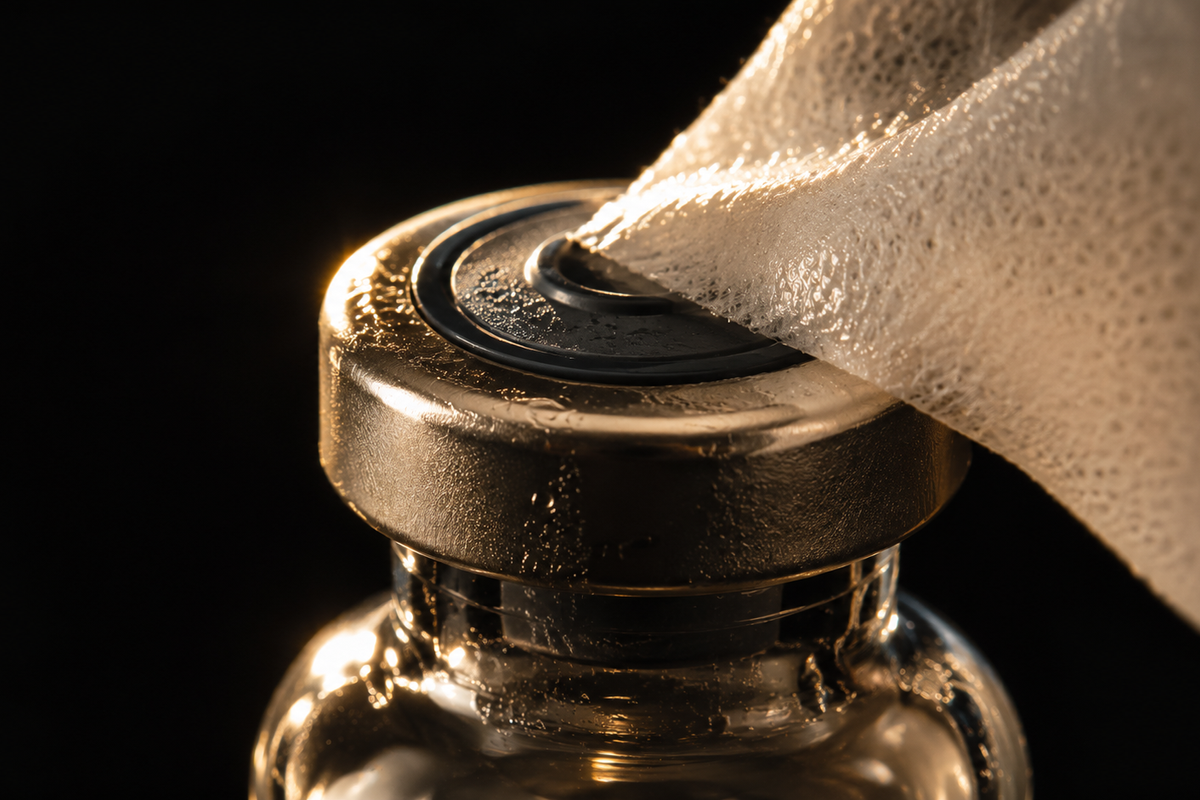
No — bacteriostatic water does not chemically "expire" or turn toxic the instant it hits 28 days. The widely repeated 28-day figure is a contamination-safety beyond-use standard for multi-use vials (from USP <797> and CDC injection-safety guidance), not an expiration date for the water itself. Sealed, unopened bacteriostatic water is good until its printed expiration (typically about two years), and once opened, the 0.9% benzyl alcohol keeps inhibiting microbial growth well beyond four weeks. The 28-day number is a conservative cap that assumes the worst about handling — which is exactly why it's the standard we point to.
This post separates the myth from the standard from the real-world chemistry, so you understand why the 28-day rule exists rather than just repeating it.
The myth
You'll see two opposite myths online, both wrong:
- "Bacteriostatic water is dead or dangerous the moment it passes 28 days."
- "A sealed bottle of bacteriostatic water never expires, so it doesn't matter."
Neither holds up. One treats a safety guideline as if it were a chemical cliff; the other ignores that any opened multi-use vial carries a real, if slow, contamination risk.
The standard
For a multi-use vial that has been punctured, the recognized beyond-use date is 28 days, per USP <797> and CDC injection-safety guidance. Read that carefully: it's a contamination-safety limit for multi-dose vials — a rule about microbial risk from repeated access, not a statement that the molecule has broken down. Sealed and unopened, bacteriostatic water is good until the printed expiration date, which is usually around two years out.

The reality
Here's the part the "28-day toxic" crowd misses: bacteriostatic water's preservative is 0.9% benzyl alcohol, and benzyl alcohol is bacteriostatic — it inhibits microbial growth; it does not sterilize. Chemically, water plus that preservative stays stable far longer than 28 days. That's why a vial that's been refrigerated, wiped down before each draw, and not punctured a hundred times commonly remains usable well past the four-week mark in the real world.
So why point to 28 days at all? Because the standard is built for the worst case, not the best one — and good practice doesn't depend on luck. The honest framing is: the chemistry lasts longer than 28 days, but 28 days is the recognized standard, and that's what we recommend. Describe the reality; anchor the recommendation to the standard.
To get the most out of a vial: refrigerate after opening, wipe the stopper with alcohol before each draw, and minimize the number of punctures. This is storage information for research supplies, not medical advice.
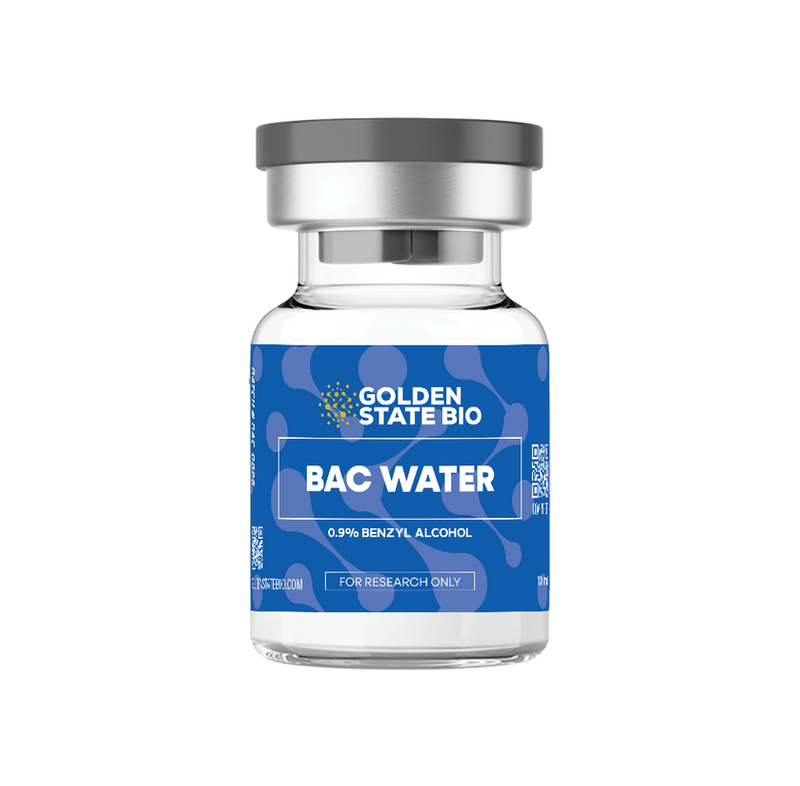
Stock up on research-grade bacteriostatic water and reconstitution supplies at Golden State Bio, and see our primer on what BAC water is and why it matters.

Frequently Asked Questions
Does bacteriostatic water really expire after 28 days?
Not chemically. The 28-day figure is a contamination-safety beyond-use date for multi-use vials from USP <797> and CDC injection-safety guidance — it addresses microbial risk from repeated access, not breakdown of the water. Sealed bacteriostatic water is good until its printed expiration, typically about two years.
Why is 28 days the standard if the water lasts longer?
Because the standard is built for the worst-case handling scenario. The 0.9% benzyl alcohol inhibits microbial growth but does not sterilize, so a conservative multi-use cap protects against contamination introduced over many punctures. The chemistry commonly holds up longer, but 28 days is the recognized, defensible recommendation.
What does benzyl alcohol actually do in bacteriostatic water?
Benzyl alcohol (0.9%) is a bacteriostatic preservative — it inhibits the growth of microorganisms. It is not a sterilant, so it slows contamination rather than eliminating it. That distinction is the whole reason for a multi-use time limit.
How should bacteriostatic water be stored after opening?
Refrigerate it after opening, wipe the rubber stopper with an alcohol prep before each draw, and minimize the number of times you puncture the vial. These practices reduce contamination risk over the vial's working life. This is storage guidance for research supplies, not medical advice.
Is unopened bacteriostatic water good for years?
Sealed, unopened bacteriostatic water is stable until the printed expiration date on the vial, which is typically around two years. The 28-day rule only applies once the vial has been opened and is being accessed repeatedly.
References
Peer-reviewed research and recognized standards that support the statements above. We cite primary sources so you can verify the science yourself. These references are provided for research context only and are not medical advice.
- U.S. Centers for Disease Control and Prevention. Questions about Multi-dose Vials (Injection Safety). CDC, Injection Safety — accessed 2026 View source →
- United States Pharmacopeia. General Chapter <797> Pharmaceutical Compounding — Sterile Preparations (beyond-use dating). USP View source →
- Meyer BK, Ni A, Hu B, Shi L. Antimicrobial preservative use in parenteral products: past and present. J Pharm Sci. 2007;96(12):3155–3167. PMID 17722087 View source →
FOR LABORATORY AND RESEARCH USE ONLY. Golden State Bio supplies research-use-only chemicals for qualified researchers. Not for human or veterinary use; not evaluated by the FDA. Nothing here is medical advice.