How to Read a Peptide Certificate of Analysis (COA)

A Certificate of Analysis (COA) is the document that proves what's actually in a peptide vial. A meaningful COA reports two things for a specific lot: identity (confirmed by mass spectrometry) and purity (measured by HPLC, shown as a percentage) — with a lot number you can match to the vial in your hand. Learning to read one is the single best skill for judging a research peptide, because "grade" describes a standard while the COA describes the actual material.
Here's how to read each section — and how to tell a real, lot-matched COA from a generic PDF reused across batches.
Why the COA Is the Whole Ballgame
Every vendor claims high purity. The COA is what turns a claim into something verifiable — but only if it's tied to your specific lot and, ideally, produced by an independent lab. Without a lot-matched COA, a purity number is just marketing.
The Two Numbers That Matter Most
- Identity (mass spectrometry): confirms the molecule is what the label says by matching its measured mass to the expected mass of the peptide. This answers "is it the right compound?"
- Purity (HPLC): separates the sample into its components and reports the percentage that is the target peptide — commonly ≥98% for quality research material. This answers "how much of it is the real thing versus impurities?"
Identity without purity, or purity without identity, only tells half the story. A good COA has both.

Reading the Rest of the COA
- Lot / batch number: must match the number printed on your vial. This is the link between the paper and the product.
- Test date and method: shows when and how it was tested (e.g., HPLC conditions, MS method).
- Appearance and other specs: physical description, sometimes water content or net peptide content.
- Testing lab: independent third-party testing carries more weight than in-house-only results.

How to Spot a COA That Actually Means Something
- The lot number on the COA matches the vial — this is the number-one check.
- It reports both HPLC purity and mass-spec identity, not just one.
- The HPLC chromatogram is included (a clean main peak), not just a bare number.
- It's specific to a batch, not a generic PDF you suspect is reused across every product.
- Bonus: an independent lab name and contact.
If a "COA" is a generic sheet with no lot number, no chromatogram, and a suspiciously round number reused everywhere — treat the purity claim as unverified.
Frequently Asked Questions
What is a Certificate of Analysis (COA)?
A COA is a lab document that reports what a specific lot of peptide actually contains — its identity confirmed by mass spectrometry and its purity measured by HPLC — tied to a lot number you can match to your vial. It's the primary basis for trusting a research peptide.
What should a good peptide COA include?
At minimum: HPLC purity (a percentage), mass-spec identity, a lot/batch number that matches your vial, the test date and method, and ideally a chromatogram and an independent testing lab. Both purity and identity should be present — one without the other is incomplete.
What does HPLC purity mean on a COA?
HPLC (high-performance liquid chromatography) separates a sample into its components and reports the percentage that is the target peptide. A higher percentage — commonly ≥98% for quality research material — means fewer impurities. It's the "how pure" number.
How do I know a COA is legitimate and not reused?
Match the lot number on the COA to the number printed on your vial — that's the key check. A real COA is batch-specific and usually includes a chromatogram; a generic PDF with no lot number, no graph, and the same round number across every product should be treated as unverified.
Does a higher milligram vial mean higher purity?
No. Milligrams are mass (how much peptide is in the vial); purity is the percentage that's the target compound, measured by HPLC. They're independent — a 99% pure vial is cleaner than an 80% pure vial regardless of the milligram size. Judge purity by the COA.
References
Peer-reviewed research and recognized standards that support the statements above. We cite primary sources so you can verify the science yourself. These references are provided for research context only and are not medical advice.
- International Council for Harmonisation (ICH). Q3A(R2): Impurities in New Drug Substances (0.10% identification/characterization threshold). ICH / FDA guidance View source →
- Maurer J, Grouzmann E, Eugster PJ. Tutorial review for peptide assays: an ounce of pre-analytics is worth a pound of cure. J Chromatogr B. 2023. PMID 37832388 View source →
- United States Pharmacopeia. General Chapter <85> Bacterial Endotoxins Test. USP View source →
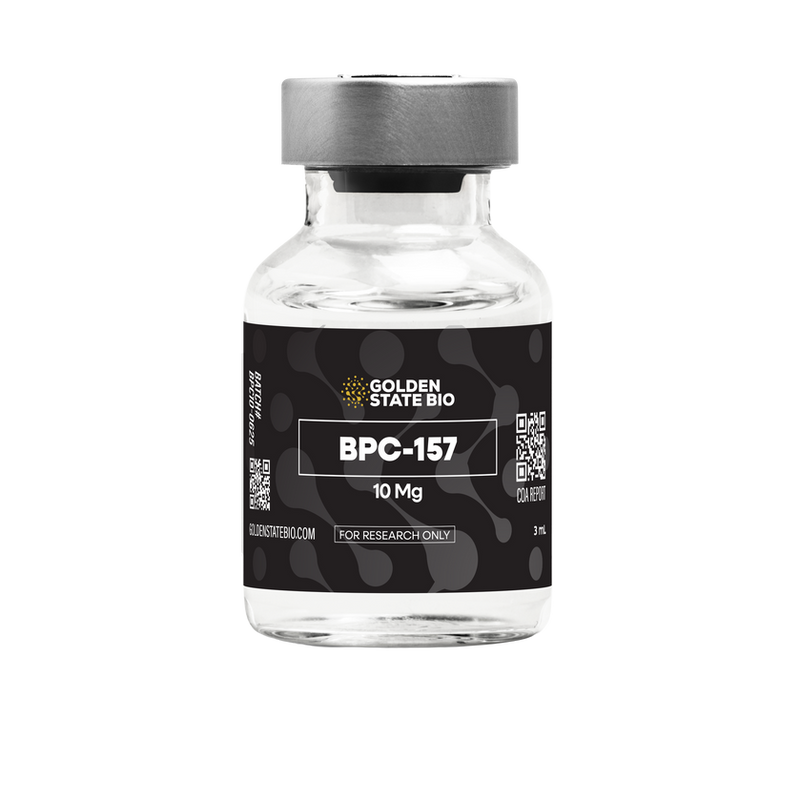
FOR LABORATORY AND RESEARCH USE ONLY. Golden State Bio supplies research-use-only chemicals for qualified researchers. Not for human or veterinary use; not evaluated by the FDA. Nothing here is medical advice.