Is a "Research-Grade" Peptide a Different Molecule Than Pharmaceutical Grade? Myth vs. Fact
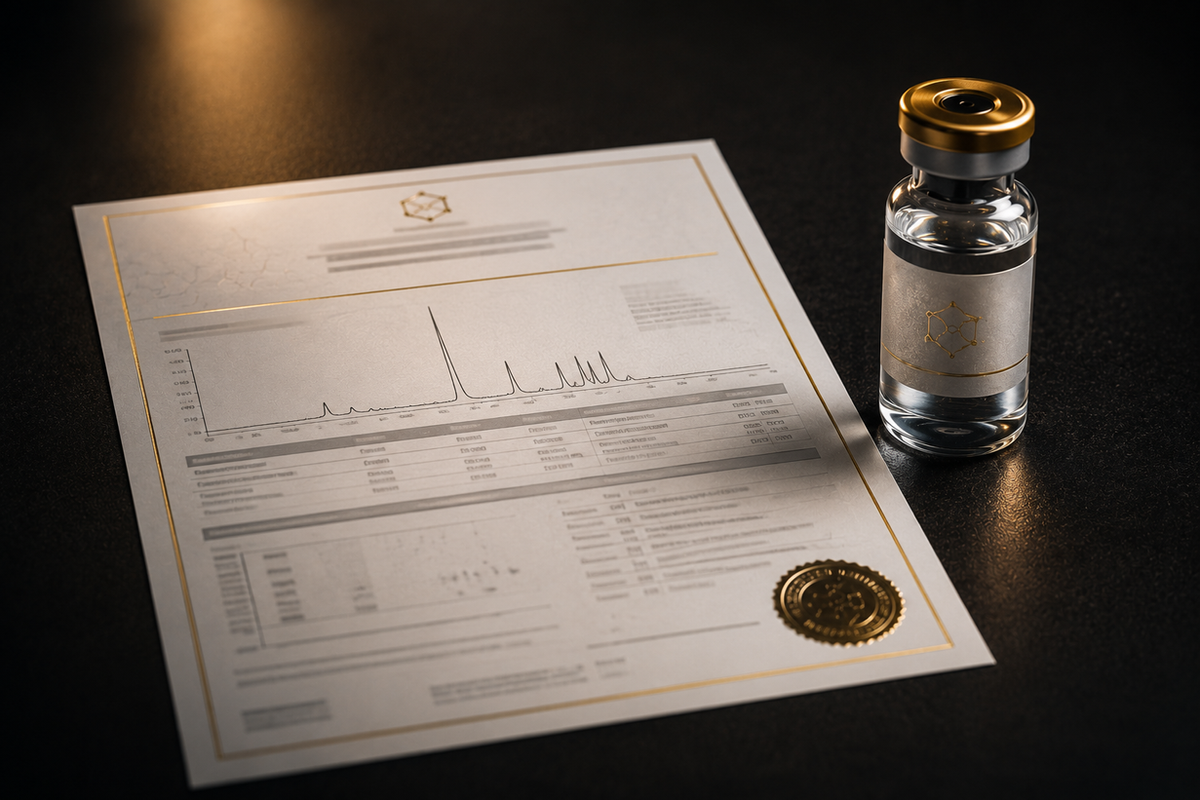
No — "research-grade" doesn't mean a different or fake molecule. The peptide sequence is the same, and research-grade material commonly reaches high HPLC purity (95–99%). The difference between research-grade and pharmaceutical/GMP grade is regulatory and procedural — cGMP manufacturing, sterile environments, endotoxin testing, full characterization of every impurity above 0.1%, and clearance for human use — not the identity of the molecule. Research-grade peptides are sold for laboratory and research use only (RUO) and are not cleared for human or veterinary use.
The myth
"Research-grade is a knockoff — a weaker, cheaper, or fake version of the real pharmaceutical peptide." This confuses the molecule with the standard the process is held to.
The standard
A peptide is defined by its sequence, and that sequence is the same whether it's made for a lab or a clinic. Where the grades genuinely diverge is the manufacturing and regulatory envelope: pharmaceutical/GMP production adds cGMP facilities, sterile compounding, endotoxin testing, chain-of-custody documentation, and full characterization of every impurity above 0.1% — with the explicit endpoint of human use. A typical research COA reports a single HPLC purity number and mass-spec identity for the lot; a pharmaceutical spec adds that deeper impurity and safety profile.
The reality
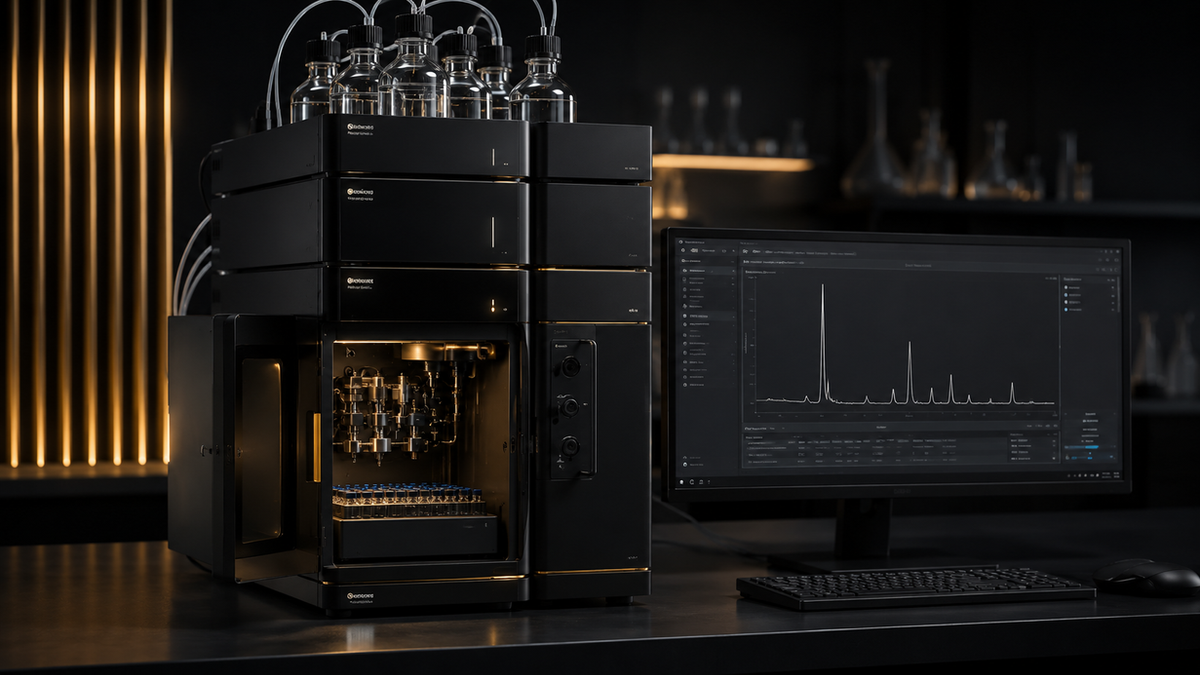
"Grade" is about the standard the whole process is held to, not whether the molecule is real. A research-grade peptide can be chemically excellent — high purity, correct identity — and still, correctly, be RUO: not manufactured, tested, or legally intended for human use. That's not a loophole to wink at; it's the honest line. What makes a research-grade product trustworthy is verifiable documentation: a lot-matched COA with HPLC purity and mass-spec identity you can tie to your specific vial. Judge the grade by the standard and the paperwork; judge the purity by the COA. GSB's position: everything is research use only, and we back it with documentation you can actually check.
Explore research-grade, third-party-tested peptides — each with a lot-matched COA — at Golden State Bio, and see why milligrams aren't the same as purity.
Frequently Asked Questions
Is a research-grade peptide the same molecule as pharmaceutical grade?
Yes — the peptide sequence is the same molecule. Research-grade material commonly reaches high HPLC purity (95–99%). The differences are regulatory and procedural (cGMP, sterile manufacturing, endotoxin testing, impurity characterization, human-use clearance), not the identity of the molecule.
Then what actually makes them different?
The standard the process is held to. Pharmaceutical/GMP grade adds cGMP facilities, sterile environments, endotoxin testing, full characterization of every impurity above 0.1%, chain-of-custody documentation, and clearance for human use. Research-grade is for laboratory use only.
Does "research-grade" mean lower quality?
Not necessarily. Research-grade can be very high purity and correct identity. It refers to the intended use and manufacturing standard — RUO, not human-use — rather than a lower-quality molecule. The way to verify quality is a lot-matched COA.
How do I judge a research-grade peptide's quality?
By its Certificate of Analysis: HPLC purity and mass-spec identity, tied to the specific lot number on your vial, ideally independently tested. Grade describes the standard; the COA describes the actual material.
Can I use research-grade peptides on myself?
No. Research-grade peptides are sold for laboratory and research use only and are not cleared, tested, or intended for human or veterinary use. Health questions should go to a licensed provider.
References
Peer-reviewed research and recognized standards that support the statements above. We cite primary sources so you can verify the science yourself. These references are provided for research context only and are not medical advice.
- International Council for Harmonisation (ICH). Q3A(R2): Impurities in New Drug Substances (0.10% identification/characterization threshold). ICH / FDA guidance View source →
- United States Pharmacopeia. General Chapter <85> Bacterial Endotoxins Test. USP View source →
- U.S. Food & Drug Administration. Distribution of In Vitro Diagnostic Products Labeled for Research Use Only or Investigational Use Only. FDA Guidance for Industry, 2013 View source →

FOR LABORATORY AND RESEARCH USE ONLY. Golden State Bio supplies research-use-only chemicals for qualified researchers. Not for human or veterinary use; not evaluated by the FDA. Nothing here is medical advice.