Is Sterile Water the Same as Bacteriostatic Water? Myth vs. Fact

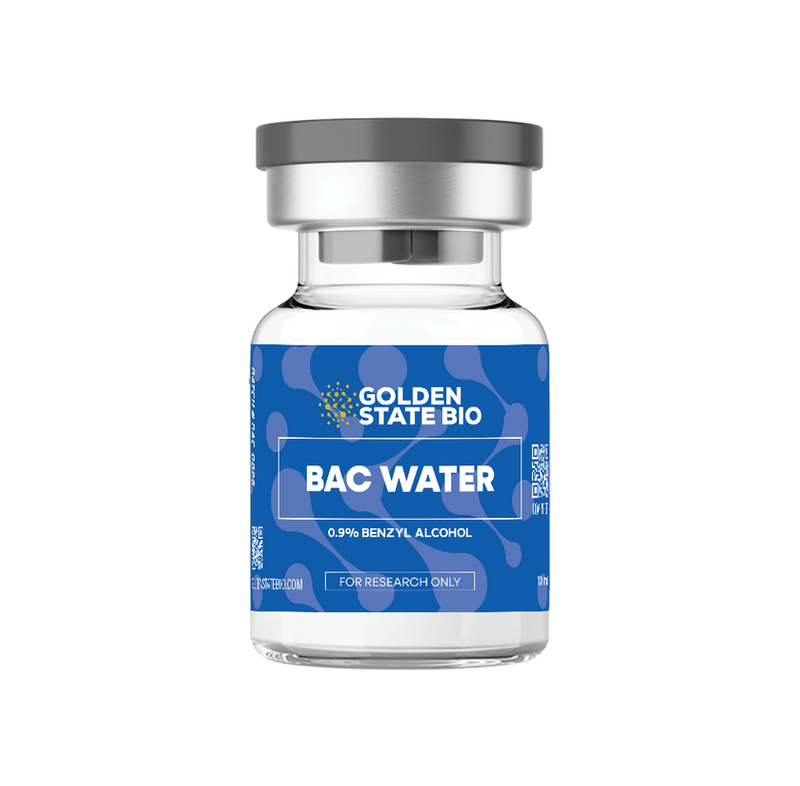
No — sterile water and bacteriostatic water are not interchangeable. Bacteriostatic water contains 0.9% benzyl alcohol, a preservative that inhibits microbial growth, which is what supports a multi-use vial that gets accessed repeatedly. Plain sterile water has no preservative at all. For anything you'll draw from more than once, that difference is the whole point — and it's why GSB guidance is always bacteriostatic water, never plain sterile water and never tap water, for multi-use research vials.
Here's the myth, the standard, and the practical reality.
The Myth
"Water is water — sterile water works the same as bacteriostatic water." It's an easy assumption, because both are clear, sterile-looking liquids in similar vials. But one is preserved and one isn't, and that changes how safely each holds up across repeated use.
The Standard
The defining difference is the preservative. Bacteriostatic water contains 0.9% benzyl alcohol, which inhibits the growth of microorganisms. Sterile water contains no preservative. For a single-use application, preservative-free sterile water can be appropriate. But for a multi-use vial — one punctured and drawn from more than once — the preservative is what supports a usable window, because every puncture is an opportunity for contamination.

The Reality
Both start out sterile. The difference shows up over time and repeated access. Bacteriostatic water's benzyl alcohol keeps inhibiting microbial growth after the vial is opened, which is why it's the standard diluent for multi-use research vials. Plain sterile water, with nothing to hold microbial growth in check, has a much shorter safe window once it's been accessed. And tap water is off the table entirely — it is neither sterile nor preserved. The honest rule: single-use, sterile water can work; multi-use, reach for bacteriostatic water; never tap.

Frequently Asked Questions
Is sterile water the same as bacteriostatic water?
No. Bacteriostatic water contains 0.9% benzyl alcohol, a preservative that inhibits microbial growth; sterile water has no preservative. They're both sterile to begin with, but only bacteriostatic water is designed to hold up across a multi-use vial's repeated punctures.
When would you use sterile water instead of bacteriostatic water?
Preservative-free sterile water can be appropriate for a single-use application. For any vial you'll access more than once, bacteriostatic water is the standard because its benzyl alcohol inhibits microbial growth over repeated draws.
What does the benzyl alcohol in bacteriostatic water do?
The 0.9% benzyl alcohol is a bacteriostatic preservative — it inhibits the growth of microorganisms. It doesn't sterilize (it isn't a sterilant), so it slows contamination rather than eliminating it, which is exactly why multi-use vials still have a recommended time limit.
Can I use tap water to reconstitute a peptide?
No. Tap water is neither sterile nor preserved and should never be used. For multi-use research vials, use bacteriostatic water; for single-use, sterile water can be appropriate. This is handling guidance for research supplies, not medical advice.
References
Peer-reviewed research and recognized standards that support the statements above. We cite primary sources so you can verify the science yourself. These references are provided for research context only and are not medical advice.
- Meyer BK, Ni A, Hu B, Shi L. Antimicrobial preservative use in parenteral products: past and present. J Pharm Sci. 2007;96(12):3155–3167. PMID 17722087 View source →
- U.S. Centers for Disease Control and Prevention. Questions about Multi-dose Vials (Injection Safety). CDC, Injection Safety — accessed 2026 View source →
- United States Pharmacopeia. General Chapter <797> Pharmaceutical Compounding — Sterile Preparations (beyond-use dating). USP View source →
FOR LABORATORY AND RESEARCH USE ONLY. Golden State Bio supplies research-use-only chemicals for qualified researchers. Not for human or veterinary use; not evaluated by the FDA. Nothing here is medical advice.