Are Research Peptides Ruined If They're Not Shipped on Ice? Myth vs. Fact

No — a lyophilized (freeze-dried) research peptide is not automatically ruined if it arrives warm or without an ice pack. Peptide degradation pathways like hydrolysis need water to happen, and a properly freeze-dried vial holds less than about 1% moisture — so a dry, sealed vial tolerates normal shipping temperatures over a typical 5–14 day window with no measurable loss in HPLC purity. The real enemy in transit is moisture, not a few warm days. The right move is simple: get the vial into the fridge or freezer when it arrives.
Here's the myth, the standard, and the practical reality.
The myth
"If my peptide didn't ship on dry ice — or the package sat in a hot mailbox — it's degraded and worthless." It's an understandable worry, but it treats a dry powder as if it were a fragile liquid.
The standard
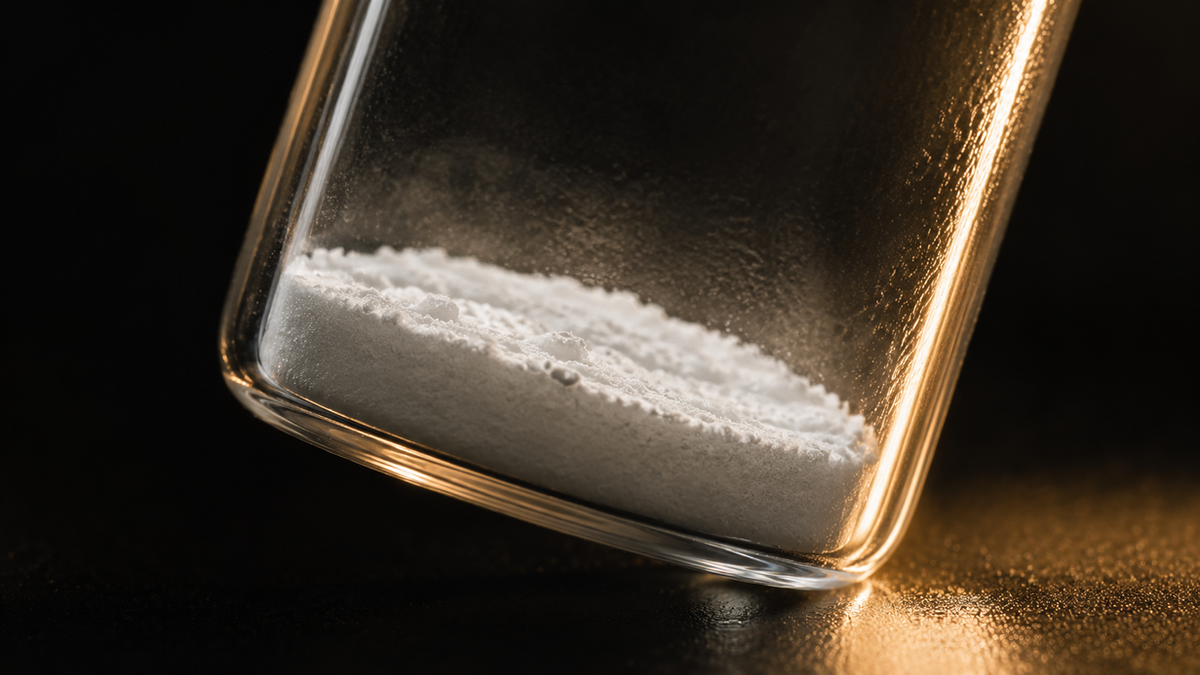
Long-term storage of unreconstituted vials is at -4°F. But storage temperature and transit temperature are different problems. The chemistry that breaks a peptide down (hydrolysis and related pathways) requires water as the medium, and lyophilization removes essentially all of it (below ~1% residual moisture). That's the entire point of freeze-drying: take water out of the equation so the material is shelf-stable.
The reality
A dry, sealed vial can ride through normal transit temperatures for a week or two without measurable HPLC purity loss. Ice or dry ice in the box is mostly reassurance theater for a powder — what actually matters is that the vial stays dry and sealed, and that it goes cold on arrival. Two honest caveats: (1) moisture is the real threat — a compromised seal or condensation is worse than warmth; and (2) peptides rich in methionine, cysteine, or tryptophan residues are more sensitive, so refrigerate those sooner. Reconstituted liquid is a different story entirely — that belongs cold, always.
Shop research-grade, third-party-tested peptides at Golden State Bio, and see our companion post on reconstituted shelf life.

Frequently Asked Questions
Are lyophilized peptides ruined if shipped without ice?
Generally no. A properly freeze-dried vial holds under ~1% moisture, and peptide degradation needs water, so a dry sealed vial tolerates normal transit temperatures over a 5–14 day window without measurable HPLC purity loss. Refrigerate or freeze it on arrival.
Why doesn't heat in transit destroy a dry peptide?
Because the main degradation pathways (like hydrolysis) require water as a reactant. Lyophilization removes nearly all of it, so a dry vial is far more heat-tolerant in short transit than the same peptide in solution would be.
What actually damages a peptide in shipping?
Moisture is the biggest risk — a broken seal or condensation lets water back in. That matters more than a few warm days. Peptides with methionine, cysteine, or tryptophan residues are also more sensitive and should be chilled sooner.
How should I store a peptide once it arrives?
Store unreconstituted (dry) vials cold — refrigerated short-term, or -4°F for long-term. Once reconstituted, keep it refrigerated at 36–46°F. This is storage guidance for research supplies, not medical advice.
References
Peer-reviewed research and recognized standards that support the statements above. We cite primary sources so you can verify the science yourself. These references are provided for research context only and are not medical advice.
- Pikal MJ, Dellerman KM, Roy ML, Riggin RM. The effects of formulation variables on the stability of freeze-dried human growth hormone (studied at 25°C and 40°C). Pharm Res. 1991;8(4):427–436 View source →
- Lai MC, Topp EM. Solid-state chemical stability of proteins and peptides. J Pharm Sci. 1999;88(5):489–500 View source →
- Journal of Pharmaceutical Sciences. Effect of water on the chemical stability of amorphous pharmaceuticals: 2. Deamidation of peptides and proteins. J Pharm Sci. 2018;107(1):42–56. PMID 28923320 View source →
FOR LABORATORY AND RESEARCH USE ONLY. Golden State Bio supplies research-use-only chemicals for qualified researchers. Not for human or veterinary use; not evaluated by the FDA. Nothing here is medical advice.